SDKs vs Direct API Calls in Documentation Strategy
Documentation strategy succeeds when someone decides SDK-versus-direct-API before building the docs.
Whether a team ships an SDK or points developers at raw HTTP calls is usually decided by engineering, sometimes by product, and almost never by the people who then have to document the consequences. That's the real subject here: the SDK-versus-direct-API decision quietly determines who the documentation serves, how it has to be structured, and how much ongoing maintenance the docs team inherits, all before anyone writes a single page. Get this wrong and you end up retrofitting a documentation strategy built for one mode onto a product that's drifted into the other, which is a slower and more expensive mistake than it sounds.
How API-first development made documentation a load-bearing part of the product
Cloudflare's 2024 traffic report found that API calls now account for the majority of internet traffic. That single fact should reframe how any team thinks about documentation. Docs are no longer a support artifact tucked behind a help button; for a huge share of products, they are the interface. Developers don't call a sales rep to understand your API. They read the reference page, or they don't, and then they either build something or they leave.
Stack Overflow's 2024 Developer Survey backs this up from the demand side: the vast majority of developers name API and SDK documentation as a primary way they learn how to use a tool. Not a colleague, not a video, not trial and error against the API itself. The documentation, first.
Layer onto that the fact that APIs have become direct revenue channels for a meaningful share of companies, and the stakes sharpen further. Documentation quality correlates with adoption. Adoption correlates with revenue. Follow that chain far enough and the docs team is now accountable to business outcomes in a way that simply wasn't true when APIs were internal plumbing nobody outside the company ever saw. So the SDK-versus-direct-API question isn't a formatting preference to be settled after the fact. It's strategic, and it deserves to be treated that way from the start.
What SDK documentation actually has to cover that API reference docs do not
SDK users aren't wiring up a single endpoint. They're building an application, and they need to understand how the pieces fit together, not just what parameters one call accepts. That's a fundamentally different editorial job than writing reference docs, and it shows up in what has to be covered.
Installation comes first: how the package gets pulled in through npm, pip, or whatever manager the language uses, because nothing else works until that step does. From there, SDK docs need a getting-started guide that walks through setup end to end, including whatever authentication flow the SDK is quietly handling on the developer's behalf. Sample applications matter too, ones that show several features working together in a realistic scenario rather than isolated snippets that only prove a single call succeeds. Crucially, the docs need to explain what the SDK is abstracting away: authentication headers, retry logic, pagination, serialization. All the plumbing a developer would otherwise have to think about.
That abstraction is a genuine feature. It's also a documentation obligation, and an easy one to shirk. If the SDK refreshes an auth token automatically, the docs need to say so in plain language, or a developer will assume it doesn't happen and build their own broken version of the same logic on top of it. Hiding a mechanism without explaining that you hid it isn't a hypothetical edge case; it's a predictable failure.
Stripe's documentation is the example most people in this space point to, and for good reason: a sandbox that behaves exactly like production, a working example within minutes, nothing left to guesswork or mocking. The docs aren't just describing the API at that point. They're actively removing uncertainty. That's the bar SDK documentation is being measured against, whether a given team has the resources to hit it or not.
What direct API call documentation has to cover that SDK docs can skip
Flip the audience and the job changes completely. Direct API users already understand how APIs work. They don't need orientation; they need precision, and they need it to be complete, because there's no library standing between them and the raw mechanics.
That means documenting every endpoint with full parameter definitions, request and response schemas, and every status code a developer might encounter. It means writing out authentication mechanics explicitly, header by header, because there's no SDK quietly attaching a bearer token for you. Error codes need real explanations with actionable guidance attached to each one, since there's no library catching an error and translating it into something readable. And rate limit behavior, along with whatever retry logic the situation calls for, has to be spelled out because the developer is the one implementing it, not a package maintainer three layers removed.
This audience tends to be power users, teams working across multiple languages where no single SDK covers everyone, or developers reaching for a beta endpoint the SDK hasn't caught up to yet. Consider what an SDK actually is: an interpretation. Somebody made choices about what to expose, how errors get handled, what the experience should feel like. Developers using the API directly are opting out of that interpretation, and the documentation needs to respect that choice rather than paper over the underlying mechanics with SDK-flavored explanations that don't apply.
There's a specific failure mode worth naming here, sometimes called the SDK-as-bottleneck problem. A team is ready to ship against a new API version, but the client library hasn't caught up yet. Direct API documentation is the escape hatch in that moment, and it only works as an escape hatch if it's actually complete enough to build against without the SDK's help.
Time-to-first-call as the metric that exposes documentation gaps in both modes
Time-to-first-call, or TTFC, measures how long it takes a developer to go from landing on your docs to running a working call. It's the sharpest diagnostic available for documentation quality, and it doesn't care whether an SDK is involved.
A TTFC under three minutes tends to produce a genuine "aha" moment, the kind that builds trust and makes a developer curious about what else the product can do. Stretch that wait out significantly and the opposite happens: doubt creeps in, not just about this one call but about whether the team behind it can be trusted to support anything more complex down the line. Postman's experiments with cutting the number of steps required to reach a first successful call showed dramatic gains, in some cases many times faster, and the lesson wasn't about content. The lesson was about structure. How the steps are arranged determines how fast someone succeeds, independent of how accurate the underlying information is.
SDK-based TTFC is often faster, since authentication and setup complexity get abstracted away. That speed only holds, though, if the getting-started guide is actually complete and has been tested against a fresh environment, not just written once and assumed correct. Direct API TTFC is slower by nature; there's simply more for a developer to assemble by hand. The gap widens fast, though, the moment error codes are vague, auth examples are missing, or request formatting is buried three pages deep in a reference nobody reads start to finish.
What makes TTFC useful beyond diagnosis is that it's measurable. A team doesn't have to guess whether their documentation strategy is working. They can time it, compare it against a target, and use that number to decide where to invest before committing to a full strategy overhaul.
Spec drift: the failure mode that undermines both SDK and API documentation simultaneously
Spec drift is what happens when the actual API implementation moves away from the published specification, and everything downstream of that spec, the SDK, the documentation, drifts right along with it. A developer updates an endpoint. The spec doesn't get updated in step. The SDK, built against the old spec, starts returning errors nobody expects. The documentation, describing behavior that no longer exists, quietly becomes fiction. None of these pieces were ever really synchronized to begin with; they were built independently and happened to agree for a while.
The downstream effect is predictable and well documented. Developers stop trusting the docs and start reverse-engineering endpoints from error messages instead. Postman's 2024 survey of thousands of developers found a significant share already dig through source code to figure out how an API actually behaves, specifically because the documentation wasn't sufficient on its own. The same survey identified inconsistent documentation as the single biggest collaboration blocker developers report, ahead of other, more commonly blamed culprits.
SDK documentation is especially exposed here. A broken SDK caused by spec drift doesn't just create confusion the way a stale paragraph might; it stops developers from shipping, full stop. Add to that a maintenance model that depends on a human remembering to update the docs every time the API changes, and the whole approach stops holding up. Not occasionally. Systematically, as the surface area grows and the number of people touching the API expands past whoever originally understood the whole system.
This isn't really a tooling failure at its root. It's an architectural one. Documentation built as a downstream artifact, something written after the API exists and updated whenever someone remembers to, is structurally guaranteed to drift eventually. The fix isn't more diligence. It's a different architecture.
Treating the API specification as the single source of truth for both docs and SDKs
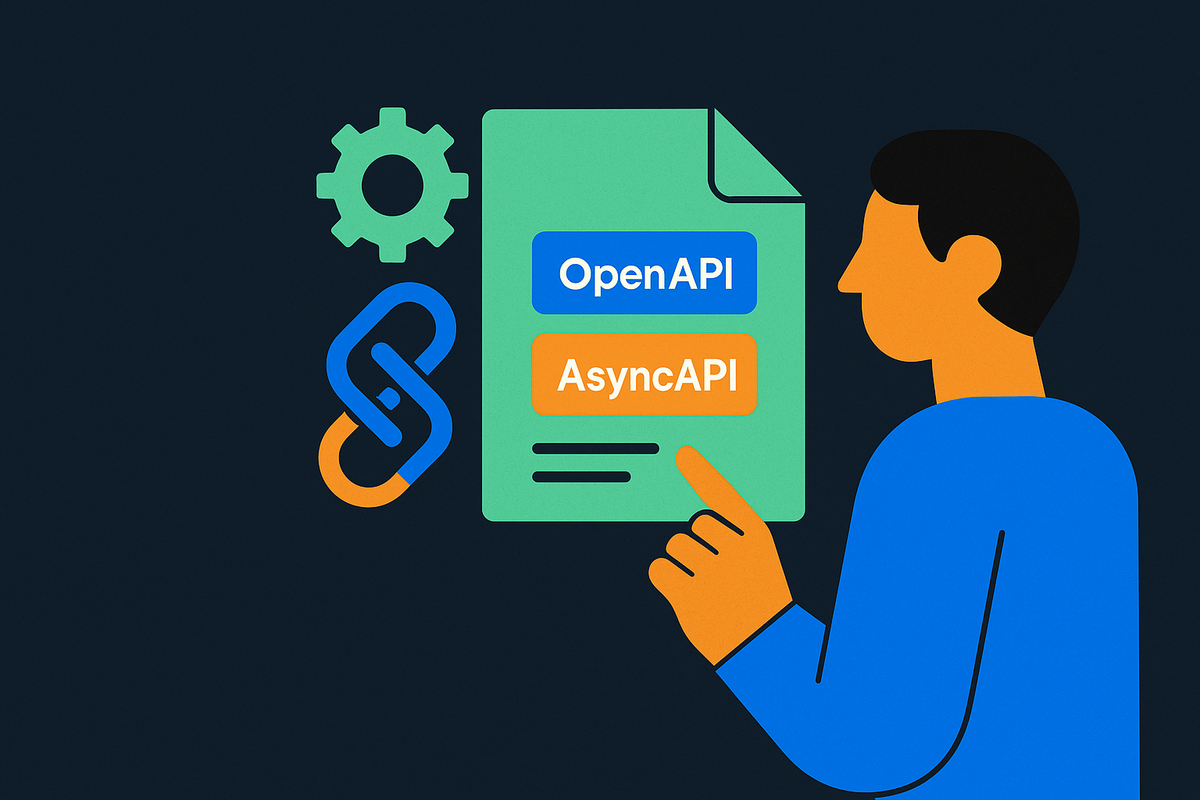
The industry has largely converged on an answer: treat the OpenAPI specification, or an equivalent like AsyncAPI or protobuf for gRPC services, as the one canonical artifact. Documentation and SDKs get generated from it, not maintained in parallel next to it. That distinction, generated from versus maintained alongside, is the whole ballgame.
When the spec changes, documentation regenerates with accurate parameter lists, schemas, and response models automatically. No one has to remember to go update a page. Evergreen SDKs, meaning client libraries generated from the spec and refreshed automatically as it changes, eliminate the entire category of bug where the library quietly falls behind the API it's supposed to represent.
The tooling here has matured quickly. Stainless generates SDKs across a wide range of languages and wires up GitHub workflows that regenerate and publish them automatically whenever the API changes; in 2025 the company also launched a documentation platform built on the same premise. Fern takes a similar approach, generating multi-language SDKs and publishing interactive documentation from a single specification so that code examples, schemas, and reference material stay in sync by construction rather than by discipline. Speakeasy and APIMatic compete in the same space, each with their own take on spec-driven generation.
Stripe's internal model is instructive here too: OpenAPI specs get generated automatically once an API is finalized, and from that single spec come SDKs, Postman collections, mock servers, and the code examples scattered across the documentation. One source feeding many outputs, rather than five teams maintaining five versions of the truth.
The mechanism that makes this reliable in practice is CI/CD integration. Spec changes trigger regeneration as part of the release pipeline itself, not as a separate manual chore someone has to remember to run. Even so, this architecture doesn't eliminate handwritten content. Guides, tutorials, and conceptual explanations still need a human behind them. What it removes is the failure-prone manual maintenance of reference material, which is exactly the part most likely to drift when nobody's watching.
The hybrid documentation layer that spec generation alone cannot produce
Auto-generated reference documentation is excellent at the "what." Endpoints, parameters, schemas, response codes: all of that can be pulled straight from a spec with no human intervention required. What it can't produce is the "why," or the "how, in this specific context." That gap is where a second layer has to sit.
A structure that holds up regardless of which mode a team leads with tends to break into three layers. Reference sits at the bottom, auto-generated from the spec, covering every endpoint and parameter and staying current without anyone having to remember to touch it. Guides sit above that, and they're handwritten by necessity: they take pieces of the reference and explain why a developer would reach for them together, in what order, for what kind of problem. Examples sit alongside guides, also handwritten, and they solve one specific, named, real-world problem end to end, showing authentication, request formatting, error handling, and response parsing as one coherent flow rather than four disconnected snippets.
SDK documentation leans on guides and examples more heavily than direct API documentation does. The abstraction that makes an SDK pleasant to use is the same abstraction that hides mechanics an experienced developer working against raw HTTP calls would otherwise infer just by reading the reference closely. Take that inference away and something has to replace it; that something is the guide layer.
Some of the better documentation interfaces generate code snippets in every supported SDK language plus cURL simultaneously, updating live as a developer configures a request in the browser. That shrinks the distance between the reference layer and the example layer to almost nothing, which is worth aiming for even if full parity isn't achievable for every team.
What this all points to is where a docs team's editorial effort should actually go. The automated layer handles reference, which frees writers up to spend their time on the parts that require judgment: explaining consequence, sequence, and tradeoff, not just restating syntax that a script could have generated in the first place.
How documentation requirements shift when AI agents become primary consumers of the docs
Stack Overflow's 2025 data shows a large and growing majority of developers now use, or plan to use, AI tools somewhere in their development process. That number matters here specifically because it means AI coding assistants are increasingly reading API and SDK documentation as a first-class use case, not some edge case worth an afterthought.
Here's the part that connects directly back to the spec-as-source-of-truth argument: documentation built from a version-controlled, machine-readable spec gives AI tools a structured surface they can parse reliably. That's not a coincidence, and it's not a separate benefit tacked onto spec-driven docs. Spec-driven documentation was already going to be more accurate for human developers; it turns out the same structure is exactly what makes it legible to the tools those developers are now prompting alongside their own reading.
Static, siloed documentation, the kind that lives in a PDF or a wiki nobody updates on a schedule, is effectively invisible to an agent trying to query documentation programmatically. Worse than invisible, arguably: documentation that has drifted from the actual API doesn't just fail to help an AI agent, it actively hands that agent a confident, wrong answer, which then gets passed along to a developer who has no easy way to know it's wrong.
That raises an important question for anyone setting documentation strategy going forward. The audience isn't just the developer reading a page anymore. It's also the AI assistant that developer is prompting mid-task, and both audiences need the exact same thing: information that's accurate, structured, and current. Teams treating documentation as living infrastructure, wired automatically into the engineering workflow rather than consulted occasionally and updated by hand, are building for that reality. Platforms like Mintlify, a self-updating docs platform for dev teams and AI agents, are built around exactly this kind of always-current, machine-readable knowledge infrastructure. Teams still treating documentation as something you publish once and revisit when a support ticket forces the issue are falling behind, and the gap between the two is only going to widen as more of the reading happens by machine.
A practical framework for deciding which documentation mode to lead with
None of this settles cleanly into a universal answer, because the right mode depends on who's actually going to read the docs. Still, some patterns hold up well enough to act on.
Lead with SDK documentation when the primary audience is building full applications and needs to reach a working state fast, when the team can maintain that SDK through automated generation from a spec rather than by hand (manual maintenance at any real scale isn't viable for long), and when onboarding speed is a genuine competitive differentiator, which it usually is for consumer-facing APIs and developer platforms competing for the same attention.
Lead with direct API documentation when the audience is technical and spread across languages, so no single SDK could realistically serve everyone. Also lead with it when part of the API surface is beta or moving fast enough that an SDK can't keep pace, or when the use case demands fine-grained control that an SDK's abstraction would foreclose by design.
In practice, most mature products need both, layered rather than chosen between. Auto-generated reference from the spec sits at the foundation, current without manual upkeep, serving direct API users and also serving SDK users who occasionally need to go underneath the abstraction. SDK quickstarts and guides sit on top for the majority of consumer-facing developers who just want to get moving. Shared examples, written in cURL and every supported SDK language, come from that same spec rather than being maintained as separate, divergent documents that will inevitably fall out of sync with each other.
The deciding pressure, in the end, is maintenance. Any documentation strategy that depends on a human remembering to update it every time the API changes is going to drift, and the fix for that isn't more discipline. An architecture that removes the dependency on memory entirely is the actual fix. Documentation strategy is worth setting before the first public release, not after the first support ticket makes the gap obvious. Building docs into the engineering and release process from day one, rather than treating them as something bolted on after ship, is what separates a documentation strategy that scales with the product from one that quietly becomes a liability the product has to work around.