Structuring API Reference So an Agent Can Call It Without Reformatting
Design APIs with explicit schemas so agents can call them reliably.
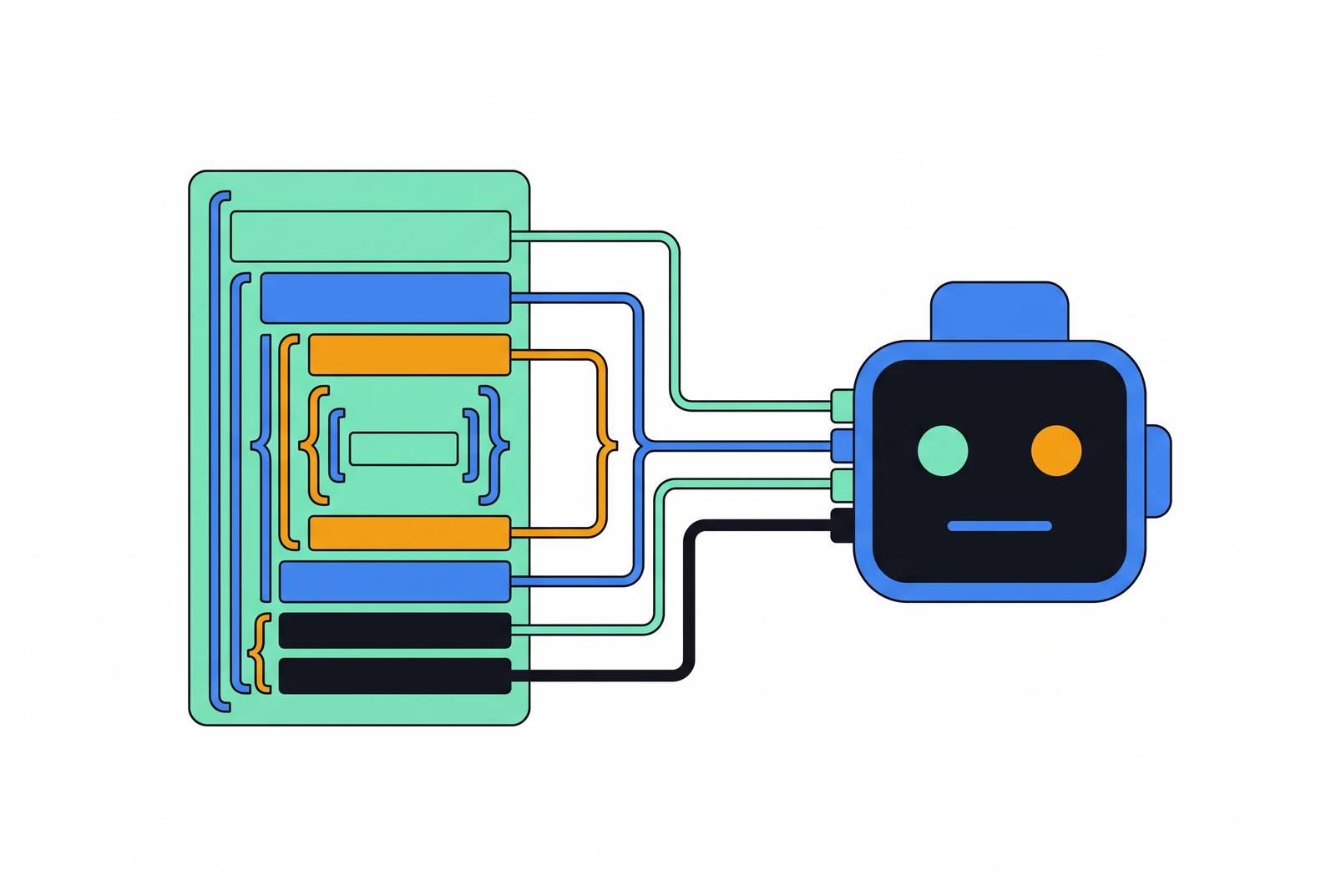
An agent that calls an API built for human readers tends to fail in a specific, recognizable way: it invents a parameter that was never declared, formats a request body in a shape the endpoint never accepts, or produces code that breaks the first time anyone runs it. The documentation was written for a reader who can infer what a page leaves unsaid, and an agent cannot.
Why agents fail at API calls when documentation is written for humans
If you read a field called is_active, you know, without being told, that it is a boolean. An agent parsing the same field has no such background to draw on. If the type is not declared explicitly, the model has to guess, and guesses do not stay guesses. They turn into hallucinated parameters passed into live requests, wrong values submitted with full confidence, and broken integrations that trace back to a line of documentation that assumed a human would fill in the gap.
The more dangerous failure mode does not even throw an error. No audit log records an attempt. A workflow can run to completion on entirely fabricated data, and the only evidence is a downstream result that doesn't match reality.
Documentation written in HTML for a browser adds a second, quieter cost on top of this: token overhead. A documentation page built for a human eye to scan visually becomes, for an agent, a wall of noise with a signal buried somewhere inside it.
A Structural Authoring Problem
Two responses to this problem are common, and both miss the actual fix. Neither addresses where the failure actually originates.
Research on tool-use failures in LLM agents traces the problem to what's called execution hallucination, where an agent's internal model of what a tool does diverges from what the tool actually does. None of those are rendering defects. A page can render as clean Markdown, free of HTML cruft, and still contain an ambiguous description or an undeclared field type, and if an agent works from that page, it will still hallucinate.
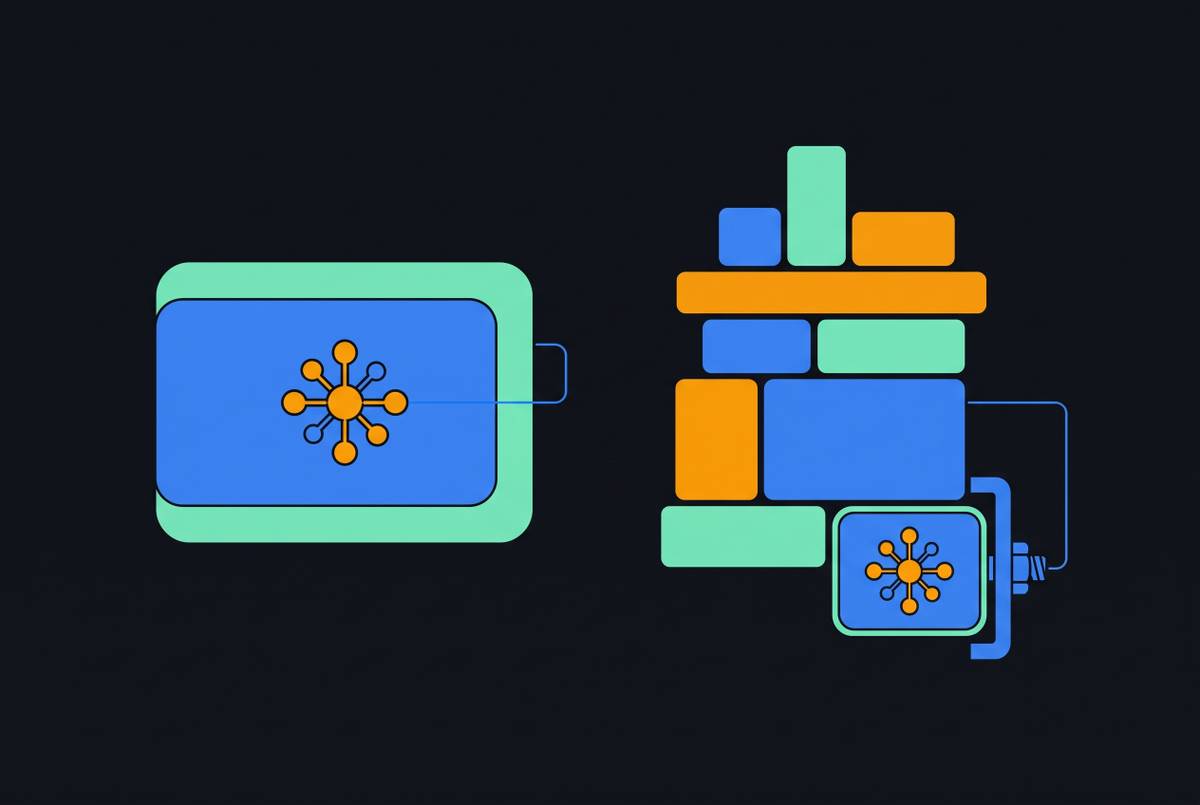
That is why a team that fixes only the rendering layer tends to walk away with half a solution. Static documentation compounds this over time: when the reference is a document separate from the API it describes, every change to the API silently widens the gap between what's written and what's true. When nobody updates the doc at the moment the endpoint changes, the agent still calls the endpoint based on the old description, and the generated code breaks against a live system that no longer matches the page.
The sections that follow work through what authoring for machine consumption actually requires at each layer of the reference: the schema itself, the names and descriptions that drive tool selection, the shape of error responses, the authentication model, the discovery surface, and the retrieval layer that finds the right section at query time. Every one of these is a decision made at the point of writing, not at the point of display.
OpenAPI as the non-negotiable structural foundation
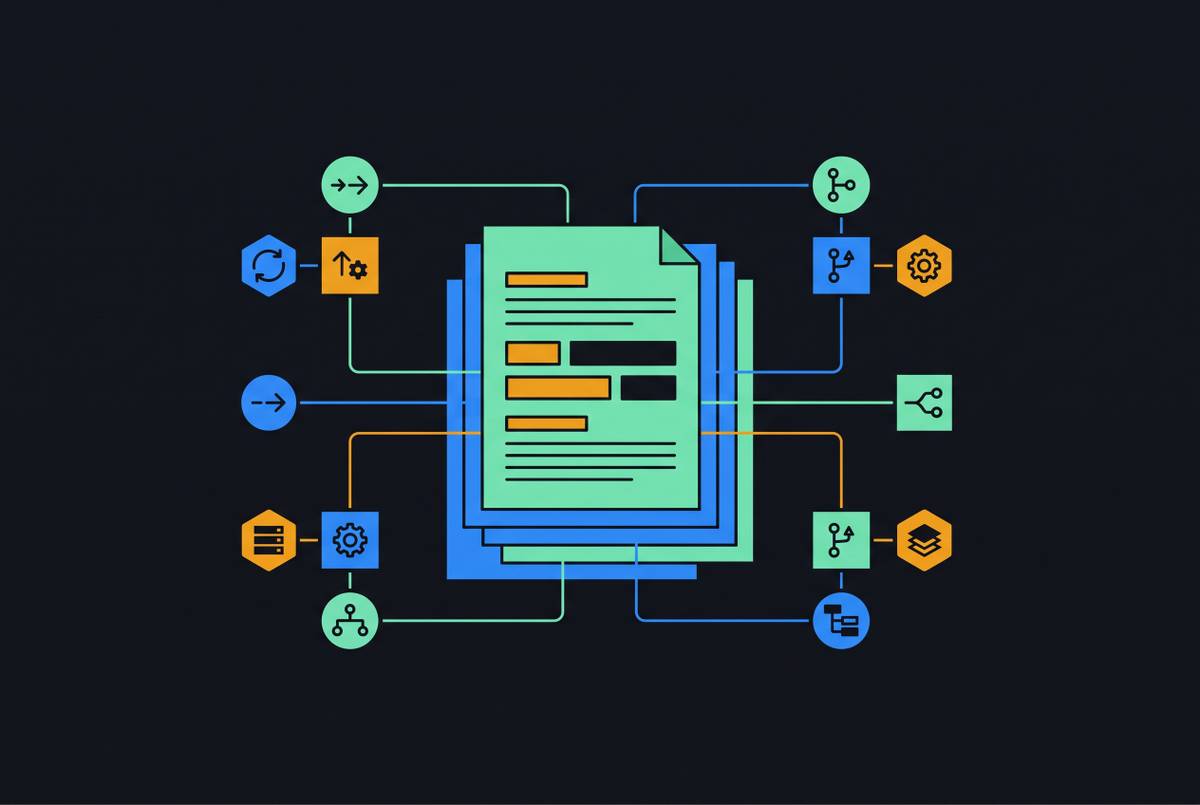
Before an agent can select or invoke an endpoint without guessing, it needs a specification that leaves nothing implicit. A complete, well-formed OpenAPI document is the minimum structural unit that makes that possible: every endpoint, every parameter, every request body, every response format, and every status code, with explicit data types and explicit constraints attached to each.
Partial specs do not function as safe defaults. If a response schema omits an optional field, the agent can't tell if its absence means null, zero, or an error.
OpenAPI specs built for agent consumption also need to carry behavior, and not just structure. Preconditions for actions that change state, guidance on whether an operation is safe to retry, and the conditions for a retry all need to sit inside the spec's own definitions. Keeping that information in a separate prose guide creates a real chance that the agent constructing a tool call never retrieves that guide at all, because nothing in its workflow told it to look there.
The question of drift causes the problem: one definition can produce many generated outputs, and keeping a single source of truth prevents the divergence that makes documentation dangerous for an agent from ever forming.
How function names and description fields shape tool selection
Once the schema is complete, the next layer of structure lives inside it: the names and descriptions attached to each function, which function as the agent's decision interface before any deeper reasoning occurs. A function name is the first thing the model reads, and a clear verb-noun pattern, search_products, create_calendar_event, cancel_order, communicates intent without forcing the agent to parse a paragraph just to figure out what the tool roughly does.
Most API documentation states what a function does and stops there. The more valuable move is to state when to call it and when not to. A strong description states the purpose of the endpoint, the conditions under which it should be called, what has to be true before it's called, which parameters are required, which values are valid, and what errors can occur.
One structural choice outweighs most of the others at scale: the size of the toolset an agent is given access to. The fix is architectural: keep toolsets small and scoped to the task, and load additional tools dynamically as the task requires them.
At larger catalog sizes, flat lists break down regardless of how well each individual description is written, and the answer is hierarchical grouping. Once an API surface grows past a small handful of endpoints, this single change, from flat catalog to grouped hierarchy, may be the highest-leverage structural decision you can make.
Structuring error responses so agents can recover programmatically
A request eventually fails, no matter how well the schema and the descriptions are written, and what happens next depends entirely on how the error is shaped. A generic message like "Bad Request" gives an agent nothing to act on: no indication of what was wrong, no path forward, just a dead end that forces either a blind retry or a full halt. A message that reads "Missing required field: customer_id" does something categorically different. It names the exact parameter that caused the failure, and the agent can correct it and resubmit without anyone stepping in.
The structural fix here already exists as a standard: IETF RFC 9457 defines the application/problem+json media type specifically for this purpose, giving APIs a consistent, machine-parseable error format. The value compounds across an API surface. If every endpoint returns errors in the same shape, the agent needs exactly one parsing pattern for the entire API, not a separate one it has to learn by trial and error for each endpoint it calls.
That consistency needs to be documented, not just implemented. If a conflict status means the resource already exists and the correct response is to retrieve it rather than attempt to create it again, that logic needs to live in the spec's response definition, where the agent's planning process can find it, rather than in a troubleshooting article written for humans debugging after the fact.
The strongest error responses go a step further and encode the next action alongside the failure: the cause, the specific field involved, and a suggested remediation. The payoff for consistency runs in both directions. Where error shapes vary from endpoint to endpoint, agents build an unreliable internal model of how the API fails, and that unreliable model produces bad retry logic, including the same tool-bypass behavior described earlier: fabricating a success response rather than handling an error the agent never learned to interpret correctly.
Authentication patterns that work for autonomous agents
Authentication is where an assumption carried over from human-oriented documentation breaks most cleanly. Standard OAuth flows depend on a browser redirect and a consent screen, both of which assume a person is sitting at the keyboard to click through them. The structural fix is to document the alternatives explicitly: API keys and service accounts carrying pre-authorized tokens, built for workloads that run without a human in the loop.
Stripe's MCP Server shows what this looks like once a major platform commits to it. Stripe's documentation distinguishes authentication by the type of actor making the call, and agent API keys are created with only the permissions the specific client needs, marked in the Dashboard with an "Agent" badge that makes the distinction visible on the page itself. Beginning October 31, 2026, Stripe MCP will no longer accept full-access secret keys, and it will not accept restricted API keys that lack the Agent tag either. That date makes the human-path-versus-agent-path distinction an enforced contract, the first major platform to turn what has mostly been a best practice into a requirement.
The underlying principle is least privilege, and it needs to be stated in the documentation rather than left for the integrating team to figure out. Documentation that simply says "use an API key," with no scoping guidance attached, tends to push teams toward broad, over-permissioned keys, and an over-permissioned key making calls at the speed and volume an autonomous agent is capable of represents a meaningfully larger security exposure than the same key used by a single human developer.
Discovery files that let agents locate the right documentation without parsing the entire site
A well-structured reference still runs into a practical wall if the only way for an agent to reach it is to download an entire documentation site in search of one section. Discovery files exist to solve that at the architecture level, the same way robots.txt functions as a lightweight index that lets web crawlers find what they need directly. The llms.txt format works the same way for agents: a short index of available documentation pages with brief descriptions, parseable without pulling in the full site.
Its companion, llms-full.txt, serves a different need. The level of detail isn't perfectly uniform across every function and component, but the structure holds up as a working model of the format.
Twilio's MCP Server demonstrates a related but distinct architectural choice: keeping documentation retrieval and execution on separate surfaces. So an agent building an integration can't mistake a documentation lookup for a production call.
Staleness is the hardest problem discovery files face, and you need a direct answer for it, not a soft one. An llms.txt file that still references a removed endpoint, or that still describes a superseded authentication flow, will cause an agent to generate code that fails the moment it runs against the live API, and nothing in the discovery file itself signals that it's wrong. Maintaining llms.txt and llms-full.txt by hand, separate from that pipeline, just adds one more place for drift to start.
Semantic Search and the Flat-Catalog Retrieval Failure
Structural authoring and discovery files solve a lot, but they run into a separate limit once a documentation set grows large: keyword search fails to surface the right page even when every description on it is well-written. An agent searching "authenticate API requests" will miss a page about bearer tokens, or a separate page walking through OAuth, or a page on managing API keys, unless one of those pages happens to use that exact phrase. Keyword matching only returns what shares the query's literal terms, and developer intent rarely maps cleanly onto exact phrasing.
Retrieval-augmented, semantic search works against that limit directly. Because the agent now answers from retrieved content rather than filling gaps from probability, you get a lower risk of it hallucinating details that exist nowhere in the actual documentation.
Even strong semantic retrievers show measurable degradation once a catalog grows large enough, and that's the point at which the grouping and tagging decisions described earlier stop being optional polish and become load-bearing architecture. Retrieving a scoped, relevant subset through vector search over well-written descriptions holds up far better than dumping an entire flat catalog into context and hoping the model sorts it out. Semantic search also gives documentation teams a diagnostic signal they wouldn't otherwise have: the actual questions agents and developers are asking, which reveals coverage gaps that would otherwise appear only as support tickets or as silent agent failures nobody traced back to the docs.
Keeping the machine-readable layer synchronized as the API changes
Every structural choice covered so far, the complete OpenAPI spec, the scoped tool descriptions, the RFC 9457 error shapes, the agent-aware auth documentation, the discovery files, only holds its value for as long as it stays synchronized with the API it describes. The moment a breaking change ships without an update to that layer, each of those choices turns from an asset into a liability sitting quietly in the documentation, waiting for an agent to read it.
Stale discovery files make this failure mode concrete. The documentation never announces that it's wrong; the failure appears downstream, in a broken deployment, after the fact.
Teams tend to underestimate the maintenance burden this creates. An agent that calls an endpoint based on a description written for a previous version of that endpoint doesn't fail loudly. It calls the wrong parameters, submits a request that looks plausible, and you only see the breakage several steps downstream, far from the documentation page that caused it.
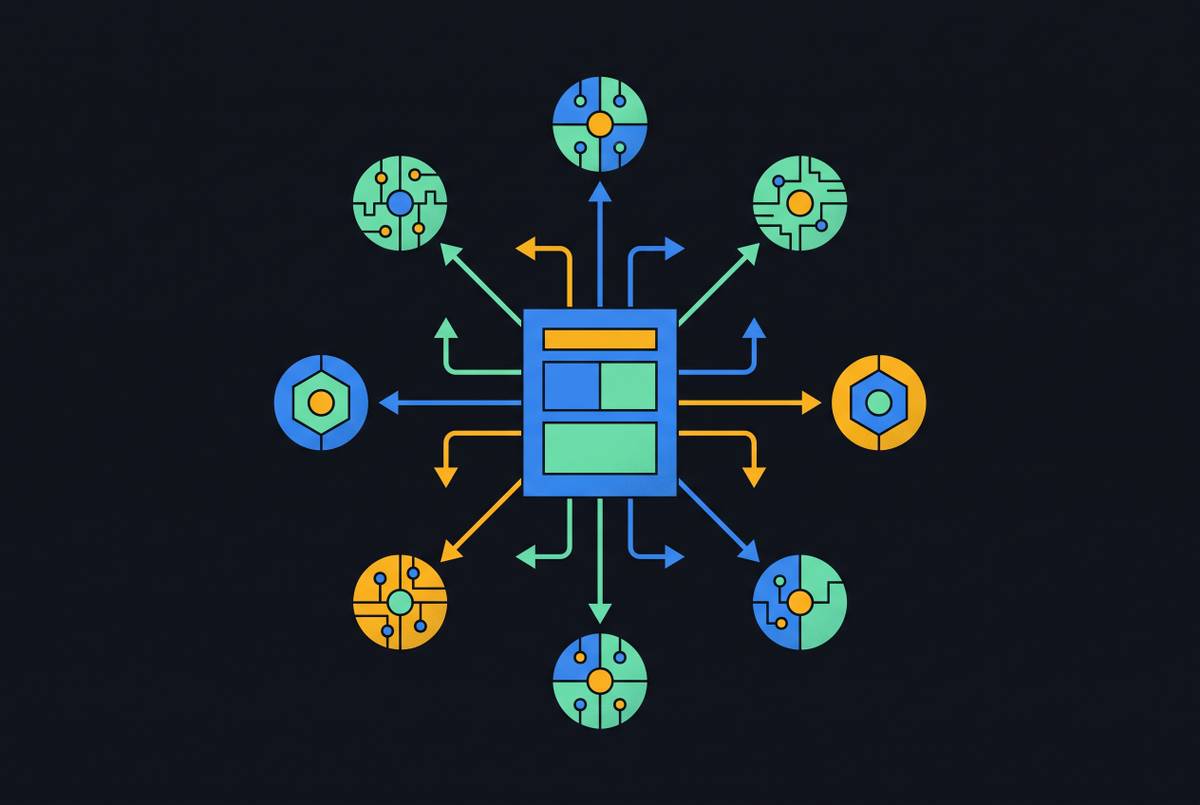
The answer running through every section of this piece comes down to one principle: a single source of truth, an OpenAPI specification or an equivalent definition file, that automatically generates the human-readable docs, the Markdown versions, the SDK examples, and the discovery files together, so that no part of that output can drift from the others. None of the structural choices described here, the complete specs, the scoped descriptions, the standardized errors, the agent-appropriate auth paths, the discovery files, deliver lasting value on their own. They hold that value only as long as the pipeline keeping them current runs automatically, on every change, rather than depending on someone remembering to update a document by hand.