What Happens When an Agent Calls a Deprecated Endpoint
Silent failures and retry loops can mask deprecated endpoints long after shutdown.
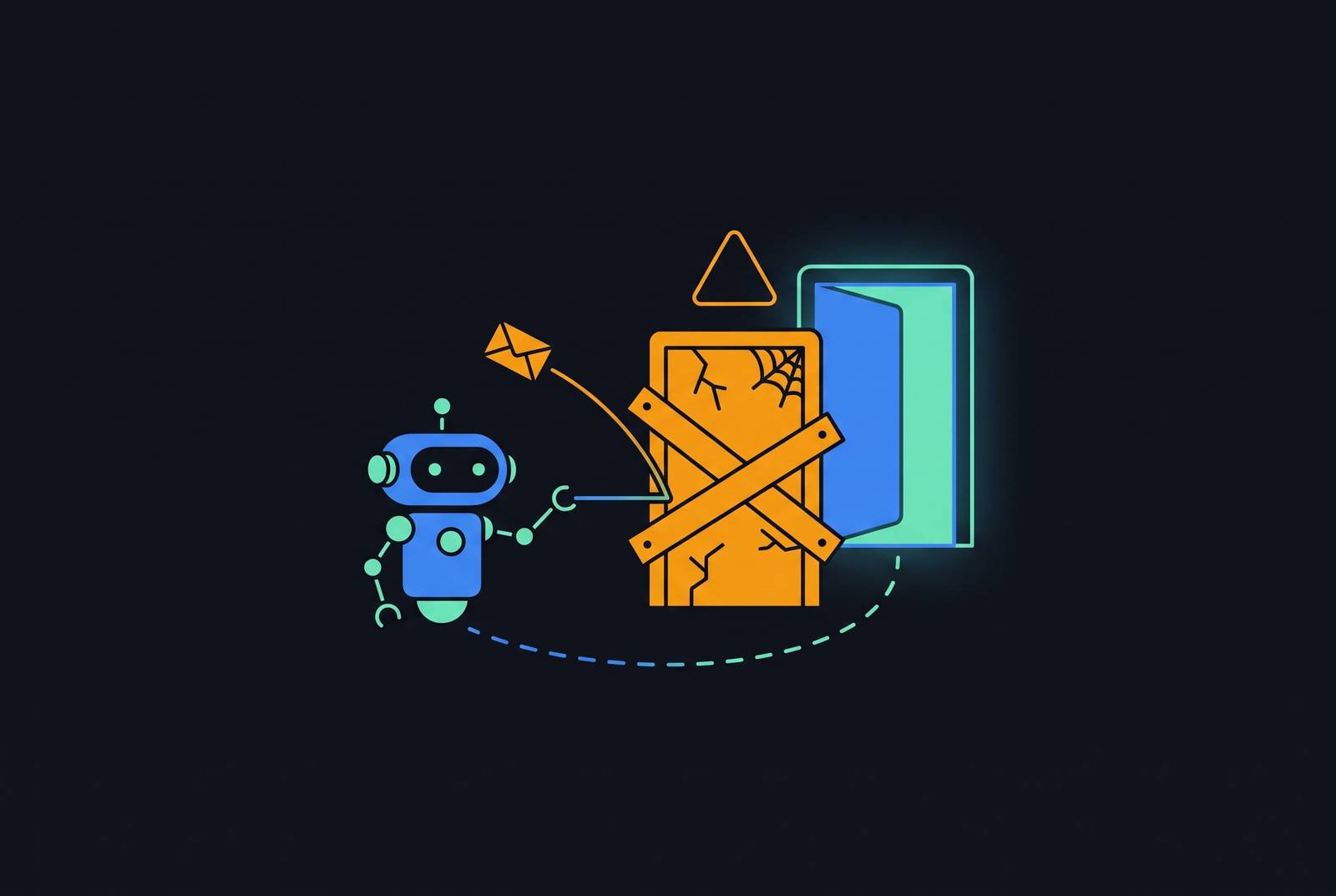
An agent calling a deprecated endpoint can fail loudly or keep working with changed behavior. Error monitoring can expose a removed endpoint, but it cannot establish that a successful response still means what the agent expects. Both problems begin upstream, in the gap between the API an agent knows and the one it calls.
Why deprecated endpoint failures split into two fundamentally different problems
An agent calling a deprecated endpoint can produce a 404 error, a silently altered output, or a structurally broken workflow. Which outcome occurs determines the useful response. Yet “deprecated” often gets used as though it described one runtime state. Deprecation opens a warning window, while shutdown ends the endpoint’s availability.
A hard failure returns an error, while a soft failure may change routing, billing, or capabilities without rejecting the request. An architectural replacement adds a separate complication. In the OpenAI Assistants-to-Responses migration, Prompts replace Assistants but can only be created in the dashboard. A workflow that created those definitions programmatically therefore faces more than a broken call. Hard failures are immediately painful but relatively cheap to diagnose, whereas soft failures are easy to miss and costly to trace.
What a hard shutdown actually does to an agent at runtime
A retired endpoint returns a 404 or an equivalent model-not-found error on every request. It does not gradually become less reliable. The resource is gone, so another attempt cannot restore it. But an agent’s client may interpret that permanent condition through machinery designed for temporary outages.
Exponential backoff assumes that waiting can improve the next attempt’s chances. Against a permanently removed endpoint, the client can exhaust its retry budget and surface a timeout that obscures the original error. What began as a precise failure becomes a slow, less informative one. The question at the call site is therefore not just whether an error arrived, but whether the agent preserved its meaning.
OpenAI’s Assistants API cutoff is August 26, 2026. After that date, calls to /v1/assistants, /v1/threads, and /v1/threads/runs return errors, with no degraded mode, grace period, or extension. Microsoft Learn gives Azure workloads the same retirement date and directs them to Microsoft Foundry Agent Service. These failures leave visible signals in errors, logs, and alerts. Without deprecation-aware error handling, however, agents can funnel those signals into generic retry paths that obscure the cause.
How soft deprecations corrupt agent behavior without triggering any alert
An endpoint responds, the HTTP stream completes, and the caller receives no error. Yet the behavior behind that response no longer matches the agent’s assumptions. Anthropic’s removal of fast mode illustrates the distinction. Requests using the deprecated mode run at standard speed, are billed at standard rates, and return no error, so identical-looking output can conceal a changed latency and cost profile.
An agent framework may catch an API exception and return a string such as “Agent stopped due to exception…” as the agent’s answer. The HTTP stream still completes normally for the caller. A monitor that checks only whether the answer arrived cannot tell that answer from a completed task.
What if the lifecycle monitor itself makes the wrong distinction? Microsoft Azure’s lifecycleStatus field uses “Deprecating” for a model that still works and “Deprecated” for one already retired. The distinction reverses an easy assumption about the warning window. Alerts based on that reading may come only when the model is retired, too late to warn of the shutdown.
Why agents specifically are prone to calling deprecated endpoints in the first place
Deprecated methods often have more examples behind them than their replacements. A method used for years accumulates tutorials, forum answers, and open-source call sites, while its successor may have only months of examples. Frequency favors the older pattern in generated code. This is not simply a missed operational notice. The agent’s learned picture of normal API usage can already be out of date before execution begins.
“When LLMs Lag Behind,” a 2026 study, found that models often fail to fully suppress outdated knowledge even when given updated information. Structured API documentation used with larger models gave the biggest single improvement the study measured, and Self-Reflection added a further 11% gain. Stripe’s llms.txt shows that agents need up-to-date information in a form they read, as well as notices written for human developers.
Repositories add to that bias when agents copy old call sites into new code. Old examples remain persuasive inputs for generation. Meanwhile, soft deprecation warnings can coexist with passing tests, and tests that mock external libraries say nothing about whether the real call succeeds.
How downstream systems surface the damage in ways that hide the root cause
A hard failure that shows up as a timeout looks like an availability problem, while a changed response can make a later stage look broken. Incident response that starts at the visible symptom may investigate the consumer of a response before examining the contract under which that response was produced.
In the Assistants migration, old thread data is not migrated, and new conversations must be started. After shutdown, historical thread data can no longer be retrieved through the API. Only messages already stored by the application can be used to recreate that history. A downstream loss of conversational continuity is therefore not necessarily a defect in the replacement agent’s reasoning or memory handling.
An endpoint that remains accessible can create a different kind of exposure. Training data may lead an agent to a zombie endpoint that a human security team never inventoried. Reliability engineers can regard it as a false dependency. Security teams can see the same endpoint as an attack surface. Error alerting alone cannot reveal that exposure, because successful access is not evidence that the dependency is supported or properly inventoried.
Detecting hard failures before they reach production agents
Teams trying to catch a shutdown before production calls fail need to connect monitoring to deprecation notices alongside error channels. Notices can appear in developer portal changelogs, low-priority email digests, or versioned SDK release notes. None automatically receives the urgency of an incident alert. By the time a notice reaches sprint planning, the remaining window may be short.
The replacement’s scope also belongs in that assessment. OpenAI’s replacement brings together the Responses API and the Conversations API, and switching to it takes more than changing endpoint strings. Threads become Conversations, Runs become Responses that are synchronous by default, and Run Steps become Items covering messages, tool calls, and outputs. These changes affect assumptions about state and execution. Feature parity does not mean that existing workflow code can remain intact.
A published date therefore needs interpretation, just as Azure’s lifecycle field needs to be read according to its documented meaning. A notice becomes a useful operational signal when it identifies the affected dependency, the cutoff, and the breadth of the replacement that the team must assess.
Detecting soft failures, which look like correct behavior until they don't
Successful responses, clean retry logs, and even normal latency can coexist with changed output. Behavioral regression tests check whether the response still satisfies the consuming agent’s expectations by asserting on output content and the absence of errors. They are expensive to write and maintain, which helps explain why the gap persists.
The Gemini changelog’s September 2026 Antigravity Agent migration makes that distinction concrete. Built-in tool parameters changed from snake_case to PascalCase, and file edits changed from full rewrites to line-range replacements. Agents reading only output_text were unaffected by those changes. Agents running tools locally or parsing function_call steps could instead break silently. The same migration therefore has different consequences depending on which part of the response an agent treats as its contract.
Checking the final text cannot establish that a parser still interprets tool parameters or file edits correctly. Tracking costs can also help catch changes in billing. An unexpected increase may reveal altered pricing behavior, but only after costs have accumulated. Updated documentation can reduce the chance of generating an outdated call, yet the study’s findings leave a reason to test behavior even when the agent receives current context.
Why the prevailing hard-cutoff policy creates its own class of problems
Hard cutoffs are preferable to leaving zombie endpoints available indefinitely. They also set a firm deadline for migrations that vary widely in how much work they take. The Assistants API remained in beta and never graduated to GA, placing it in a shorter notice tier than a GA product. Production teams using it therefore accepted a structural risk that they may not have fully understood. Detecting the deadline does not by itself create enough time to meet it.
Microsoft’s Q&A discussion shows why some migrations resist a simple substitution. A centrally defined agent can serve many users through threads created at runtime, making the separation between agent definitions and per-user state central to the application. Replacing that setup can mean changing the architecture as well as the endpoints. Under the current hard-cutoff policy, teams get no extra time for making progress. The debate between forcing remediation and accommodating good-faith migration remains unresolved.
A 410 Gone response containing migration information, as advocated by some API documentation practitioners, would expose the cause more directly than a generic 404. It would also give error handling a clearer distinction to preserve. But neither better errors nor earlier alerts can fully compensate for a notice window that is inadequate for the required redesign.
Structural prevention: keeping the knowledge agents use synchronized with the APIs they call
Training data, static documentation, and hand-written tool schemas describe an API at a particular point, while the API continues to change. Behavioral tests and cost alerts can reveal its effects, but they do not automatically change the patterns an agent draws on. The upstream goal is to make current API knowledge part of the agent’s working context.
Version-anchored context injection gives the agent documentation for the library it actually has. Selective retrieval is important because supplying the relevant module, rather than an entire library, limits token cost and latency. Generated tool definitions address another part of the gap. Schemas derived from OpenAPI specifications or live package metadata update on the next generation pass when the underlying source changes. That narrows the set of stale operations and parameters the agent can be offered.
Documentation that updates with API changes and feeds directly into context extends this approach beyond isolated safeguards. It treats API references as living artifacts instead of files that someone must remember to revise. The Gemini changelog illustrates the pace this infrastructure must follow. The deprecation of deep-research-pro-preview-12-2025, with an October 23, 2026 shutdown date and simultaneous GA releases of successor agents, shows how the interval between replacement and removal can be weeks. For workloads that depend on previews and fall in the shortest notice tier, automated knowledge updates mean less reliance on manual updates that cannot keep up reliably.