What Separates a Documentation Tool From a Knowledge System
One drives outcomes; the other just stores files.
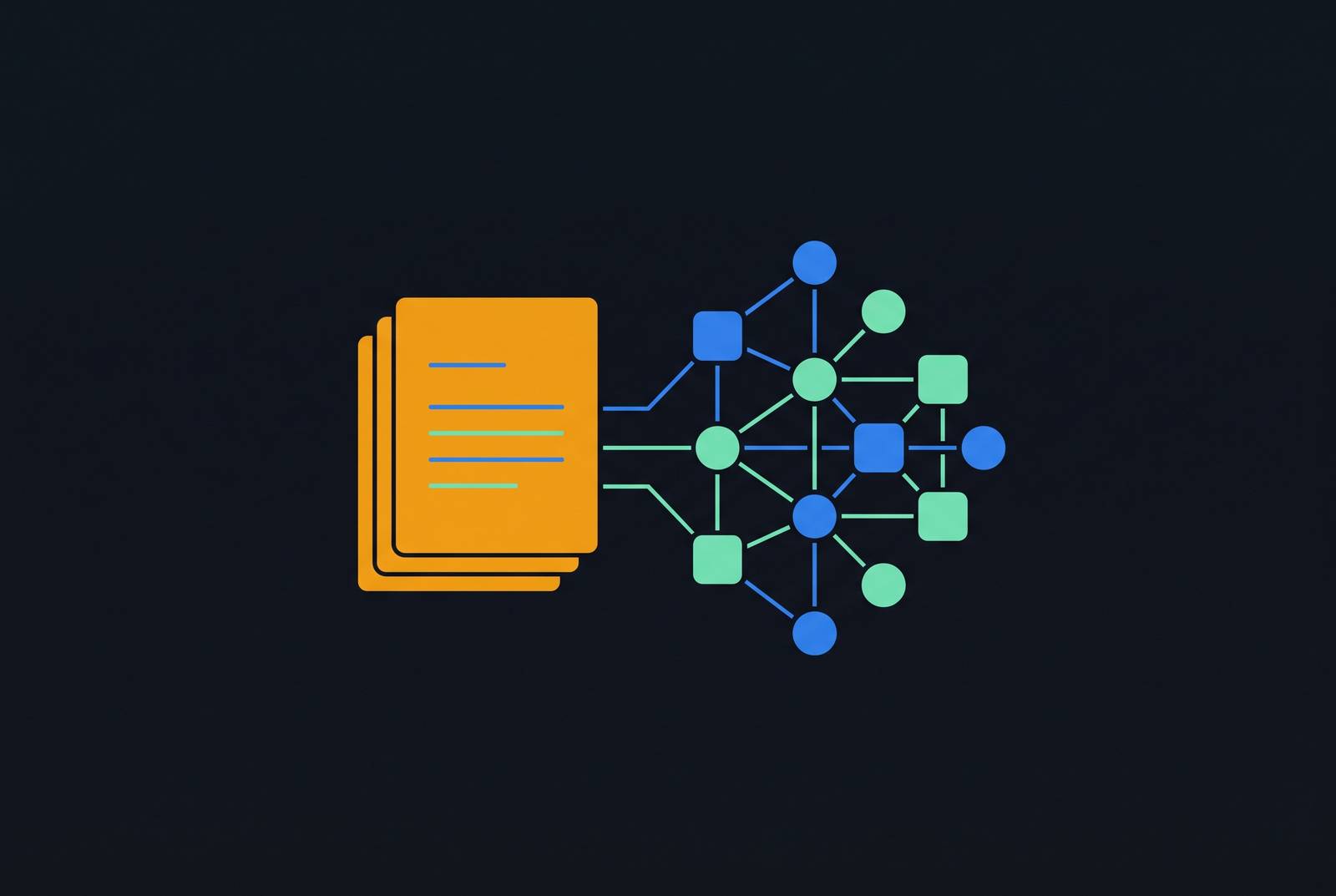
Most organizations cannot tell the difference between a documentation tool and a knowledge system, and the confusion is costly. The distinction is not about storage capacity, content type, or interface quality. It is about what the system does after content is stored. One stops at retrieval. The other continues through application and improvement. That single architectural difference determines whether institutional knowledge compounds or decays.
The endpoint question captures the gap precisely. A documentation tool answers "where is the file?" A knowledge system answers "what should I do, and why?" Helpjuice's comparison maps this to two distinct workflow patterns. Documentation follows Store, Organize, Retrieve, Control. Knowledge management follows Capture, Share, Apply, Improve. Both systems can hold the same artifact, a policy document, a runbook, a process guide, yet they produce entirely different outcomes depending on what happens after that artifact lands in the repository. Bloomfire's breakdown states it plainly: a document management system gives users the content, not the context. Specific knowledge on a topic is not shared between users, so there is not necessarily a better understanding of the issue. The file exists. The insight does not.
Why documentation tools were built to stop at retrieval — and why that boundary made sense
Documentation tools were designed for a world where the primary information problem was access, not application. The goal was getting structured, explicit content to the right person at the right time, reliably and without friction. For a procurement team pulling a signed contract, or a compliance officer retrieving a regulatory filing, that is exactly the job that needs doing. Bloomfire notes that a document management system is most beneficial for companies needing to organize and retrieve documents quickly and easily, particularly compliance or tax documents where the user already knows what they need and the system's role is to surface it dependably.
The design assumptions embedded in these tools reflect that world. Users know what document they are looking for. Search is metadata-driven, built on titles, descriptions, and keywords. Content integrity and version control are the primary governance concerns, because a contract or regulatory record must be exactly what it claims to be. Helpjuice identifies the core users as admins, legal, and operations teams, and for these roles compliance and secure access matter more than insight generation. For contracts, regulatory filings, and formal records, the Store and Retrieve model is not a limitation. It is the correct architecture.
That raises an important question: if documentation tools perform their intended job well, why does the distinction matter? The answer is that organizations increasingly need systems to do something else entirely. The problem is not that documentation tools fail at what they were built to do. It is that the job itself has changed, and tools optimized for retrieval have a structural ceiling that becomes visible the moment an organization asks its information to do more than sit still.
What retrieval cannot reach: the knowledge that never gets written down
The most consequential organizational knowledge rarely enters any retrieval system because it was never written down. The reasoning behind a decision, the alternatives that were rejected, the workaround built for a specific client constraint, all of this lives in conversations and disappears the moment those conversations end. Tacit knowledge, personal, experience-based, and difficult to formalize, is a category that Bloomfire and Helpjuice both identify as something knowledge management must address and that document management structurally cannot. A retrieval system cannot surface what was never entered.
Documentation programs capture what people remember to write. This is why organizations end up with wikis full of outcomes and no record of the reasoning behind them. The vendor selection document states which vendor was chosen. It does not state why the alternative was rejected, what constraint shaped the decision, or what the team learned during evaluation. The process guide describes the current workflow. It does not describe the failed experiments that led there. The most commonly lost institutional knowledge, why a vendor was selected over alternatives, why a process was designed around a specific constraint, workarounds built for a particular client, lives in conversations, and no one files the reasoning afterward.
One might argue that most organizations do not have the resources or discipline to systematically capture tacit knowledge, and that objection has merit. The answer is not that a knowledge system requires perfect capture. It is that a knowledge system must create the conditions and workflows that make capture easier than omission. The architecture itself has to push back against the default, which is silence. A system designed only to store what was already written accepts that default. A system designed to close the loop cannot.
How knowledge systems close the loop that documentation tools leave open
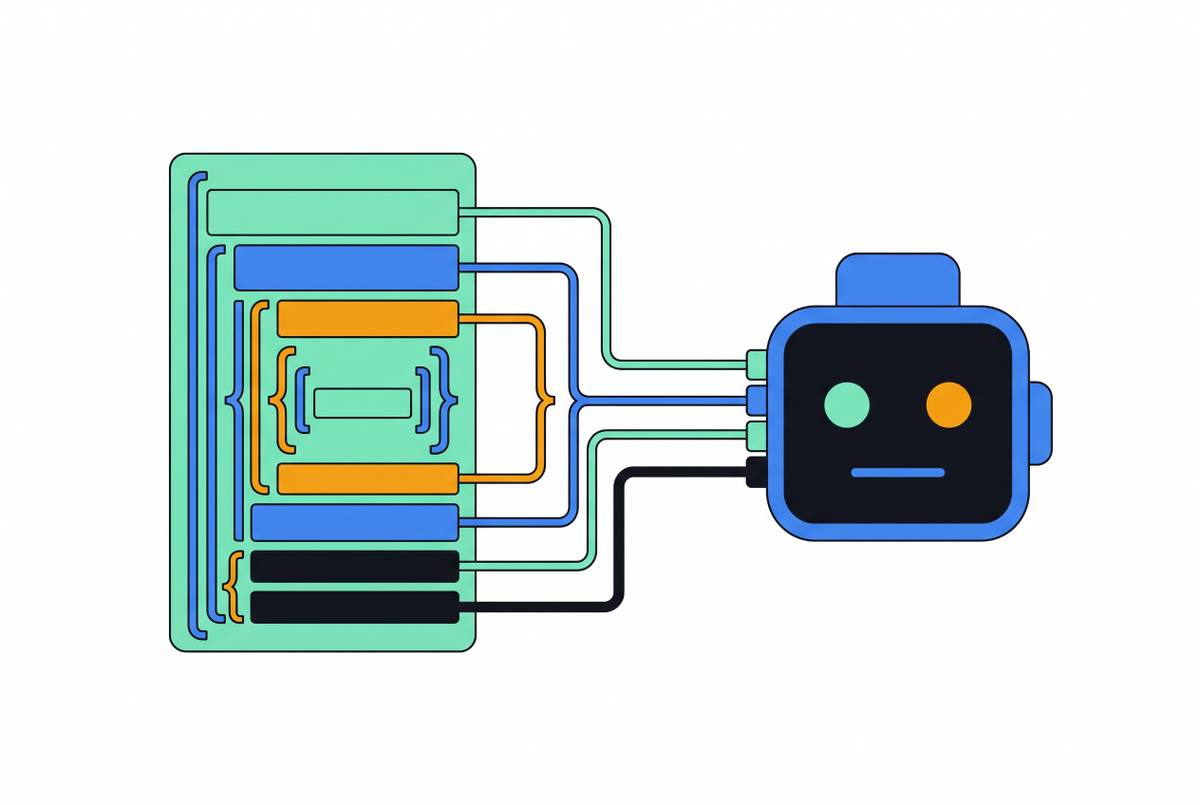
A knowledge system is defined by its ability to complete a cycle. Knowledge captured feeds decisions made, and the outcomes of those decisions improve the knowledge available for the next decision. Helpjuice's workflow comparison names the four stages explicitly: Capture, Share, Apply, Improve. Each stage depends on the previous one. Removing any stage collapses the cycle back toward document management.
Capture is the stage that distinguishes the model from passive storage. Structured workflows make it easier to record not just what was decided but why, including implicit knowledge that would otherwise remain in people's heads. The act of recording becomes part of the work rather than an afterthought. Share means permissions-aware delivery that puts the right knowledge in front of the right person at the moment they need it, not in a repository they have to remember to consult. This is a meaningful shift: the system initiates contact with the user rather than waiting to be searched.
Apply is where knowledge is integrated into the workflow where the decision is being made, not consulted separately after the fact. A support agent resolving a ticket sees the relevant runbook inside the ticket interface, not in a separate tab they might forget to open. Improve closes the loop. Usage signals, review cadences, and feedback mechanisms surface what is stale, what is missing, and what is being misused. The system gets more accurate over time rather than drifting toward decay. Bloomfire identifies the goal of a knowledge management system as making collective knowledge available in a format people can use, which implies not just storage but active delivery and ongoing curation. Helpjuice lists the downstream effects: faster onboarding, reduced duplication of work, improved decision-making, and better customer support. All of them depend on the Apply and Improve stages that documentation tools do not include.
What decay looks like in practice when the improvement loop is missing
Without a built-in improvement loop, documentation tools do not hold steady. They drift toward decay, and the drift is invisible until the damage is done. Consider the verified-but-stale problem. A verification timestamp signals freshness to users and AI retrieval systems, but if the verifier checked the card without checking the underlying product or process, the signal is false. Content carries authority it has not earned. A runbook stamped as verified three months ago describes a workflow that changed two months ago, and nobody notices because the timestamp says everything is fine.
The decay pattern is structural rather than the result of particular teams failing. Technical teams may document heavily while sales, operations, finance, or field service teams keep their real knowledge in email, chat, spreadsheets, or personal files. The wiki becomes an official record of a fraction of what the organization actually knows, and that fraction ages while the living knowledge moves elsewhere. Without governance, structured review cadences, ownership assignment, and feedback loops, wikis accumulate too many spaces, too many similar pages, and too many outdated instructions faster than any team can clean them up. MangoApps's analysis identifies scheduled review cycles, auto-governance reminders, acknowledgment tracking, and audit trails as the mechanisms that prevent this decay. None of them are native to documentation tools.
Disciplined teams can maintain documentation tools through manual governance, and some do. But manual governance is precisely what documentation tools require and knowledge systems are designed to reduce. The failure mode arrives when discipline lapses, which it does, under pressure, during reorgs, after the person who owned the wiki leaves. The decay problem also intensifies when AI agents enter the picture. An AI agent cannot ask a clarifying question, so undocumented context or stale content that used to erode slowly now fails loudly, in production.
Why AI deployment raises the cost of stopping at retrieval
When AI agents are added to an organization's stack, the limitations of a documentation tool stop being a productivity inconvenience and start being an infrastructure failure. AI systems do not fail because the models are weak. They fail because the knowledge feeding them is fragmented, duplicated, or outdated, which is why knowledge management is now treated as AI infrastructure, not a separate function. The distinction that once belonged to internal operations now determines whether a deployed agent returns useful answers or confident nonsense.
The reason is structural. Unlike a human, an AI agent cannot ask a clarifying question, recognize that a document is outdated by tone or context, or seek a second source. It treats what is in the retrieval system as authoritative. A person reading an old runbook might notice that a referenced menu item no longer exists, or that the language suggests a product version from two releases ago. An agent sees text and treats it as current fact. Static, siloed documentation disconnected from the tools that need it is a direct barrier to effective AI deployment. A documentation tool answers queries. A knowledge system feeds the intelligence powering the product.
The difference shows up in the smallest details. A folder of PDFs returns results for exact string matches. A knowledge system understands that "refund policy" and "return policy" refer to the same concept, because documentation tools index text while knowledge systems build meaning. Documentation that updates in sync with product changes is foundational to reliable agentic systems. A knowledge system designed for AI workflows closes this loop. A documentation tool leaves it open. GoLinks's 2026 enterprise guide identifies the shift from storage to retrieval as where the current generation of tools differs most. The strongest now answer questions instead of returning file lists, and act on what they find.
What a knowledge system built for agent workflows actually requires
The features that make a system a knowledge system rather than a documentation tool with AI search added are identifiable and specific, and most documentation tools do not have them natively. The question to ask of any system under evaluation is not whether it has AI features. It is whether the architecture supports the full cycle from capture through improvement.
Governance must be structural, not optional. Scheduled review cycles, ownership assignment per piece of content, acknowledgment tracking, and audit trails are platform-level requirements, not add-ons. MangoApps treats them as such. Search must be semantic, not just metadata-driven, meaning the system understands conceptual relationships between content rather than matching keywords. GoLinks's 2026 guide identifies hybrid retrieval as one approach modern enterprise knowledge management platforms combine alongside semantic search, vector search, and federated real-time retrieval. Workflow integration must be bidirectional: knowledge delivered inside the tools where decisions are made, and usage signals fed back into the knowledge system to surface gaps and staleness.
Analytics provide the evidence base for content quality decisions. MangoApps describes per-wiki view analytics and platform-wide engagement data as the mechanisms for identifying what is actually used, what is stale, and where gaps exist. For AI-specific deployments, the requirement is knowledge that is searchable, actionable, and automatically integrated into agent workflows, the architecture that turns documentation into a living source of truth rather than a static repository. The emerging direction is self-maintaining documentation, systems where AI writes, audits, and repairs stale content rather than just retrieving it. This would narrow the governance gap that currently defines the distinction, though the architecture is still maturing.
Many organizations have neither the budget nor the organizational discipline to run a full knowledge system, and that is a real constraint. The practical answer is to start with the governance mechanisms, ownership, review cadence, feedback loops, before the technology. Tools without governance reproduce the documentation tool failure mode regardless of their features.
How to determine which type of system your organization actually needs
The right architecture depends on the job the system must do, and for some organizations a documentation tool remains the correct choice. A documentation tool is the right fit when the primary need is storing and retrieving structured, compliance-driven content such as contracts, regulatory filings, and formal records, when users know what they are looking for, and when the content does not need to feed downstream decisions or AI systems. Bloomfire and Knowmax both frame the choice as dependent on organizational goals: manage information, or make information useful. For the first goal, a well-run repository is sufficient.
A knowledge system becomes necessary when knowledge silos are slowing decision-making, when onboarding is inconsistent because institutional knowledge lives in people's heads, when AI agents are being deployed and need a reliable, governed knowledge source, or when regulatory requirements demand traceable, auditable, continuously maintained documentation. GoLinks's 2026 guide recommends evaluating tools against five dimensions: knowledge capture and organization, AI-powered discovery, integrations, security and governance, and knowledge activation. The last dimension, activation, is the one that definitively separates knowledge systems from documentation tools. A system that cannot activate its knowledge in workflows is not a knowledge system.
The governance requirements are real and should not be minimized. Organizations that deploy knowledge systems without embedded ownership, review cadence, and accountability reproduce the documentation tool failure mode regardless of the platform they chose. For teams building AI-powered products, the distinction is not optional. Documentation that does not update in sync with product changes, that is not integrated into agent workflows, and that cannot be audited for freshness is not knowledge infrastructure. It is a liability that the agents will make visible, loudly and on the first bad answer.