RAG Use Cases in MCP-Served Documentation
MCP serves live documentation at query time, beating static RAG on accuracy for technical lookups.
The typical enterprise runs something like 93 different software applications, and company knowledge scatters across all of them. Employees burn hours hunting for answers that already live in a wiki, a team chat thread, or an API doc somewhere in that pile. RAG, or retrieval-augmented generation, grounds a language model's answers in outside data so it can speak to specifics beyond whatever it happened to learn during training. Retrieval isn't an experiment bolted onto a handful of ambitious enterprise AI projects anymore; something like 60% of LLM-based compound systems in enterprise environments already build retrieval in as a default. But retrieval built on a static vector index runs into a quiet failure mode: when source docs change faster than the index gets rebuilt, the model keeps answering, confidently, from chunks that no longer describe reality. One protocol for connecting models to context changes the plumbing under that problem, and this piece maps out where that change actually produces different, better outcomes.
What MCP changes about how documentation is served
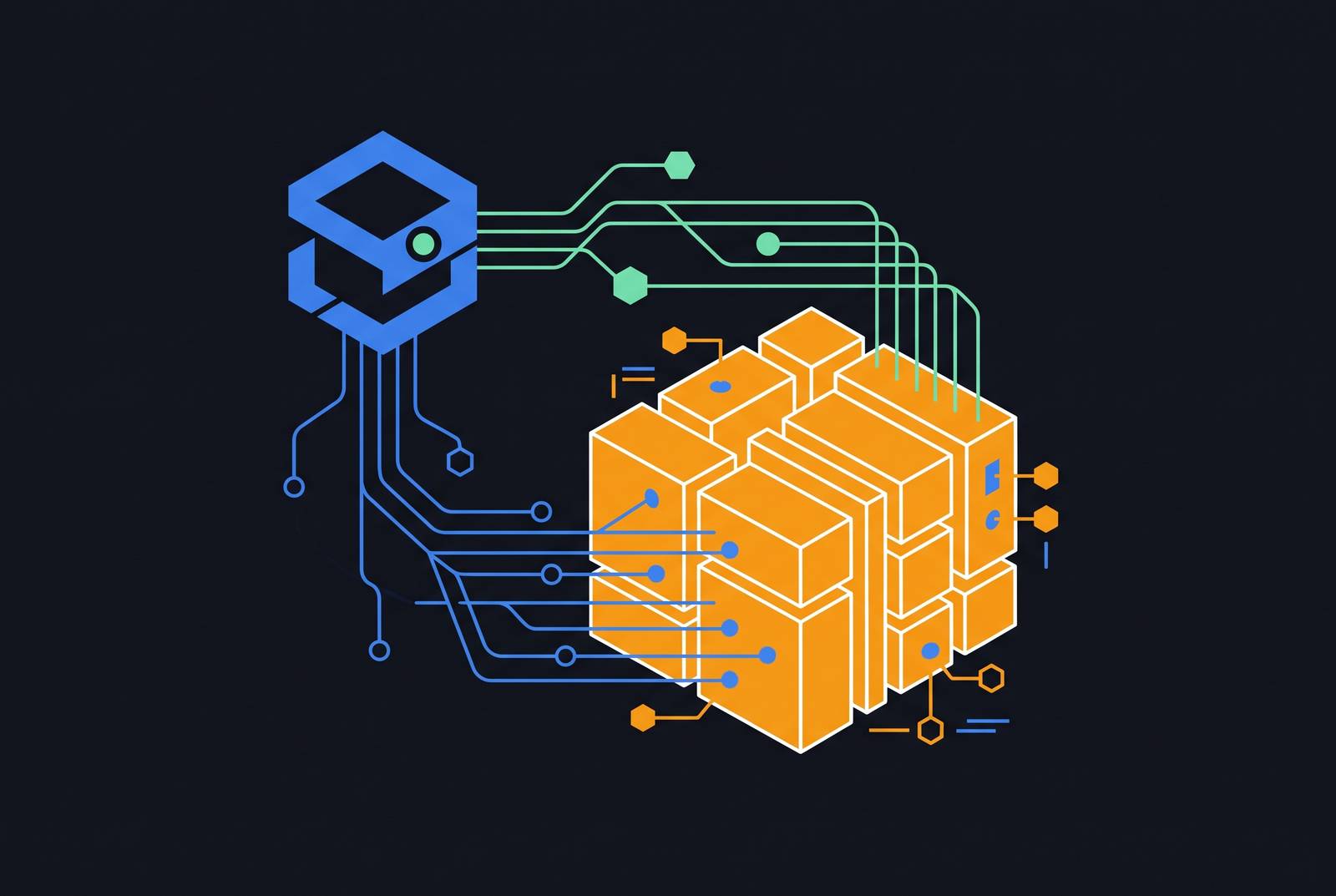
Anthropic put out MCP in November 2024 as an open standard for connecting LLM applications to outside tools and data sources, and the distinction it draws with RAG is architectural. RAG retrieves chunks of text from an index built ahead of time. MCP calls a live tool or API at the moment of the query and pulls back whatever is current right then. That's a real difference in what the model is looking at.
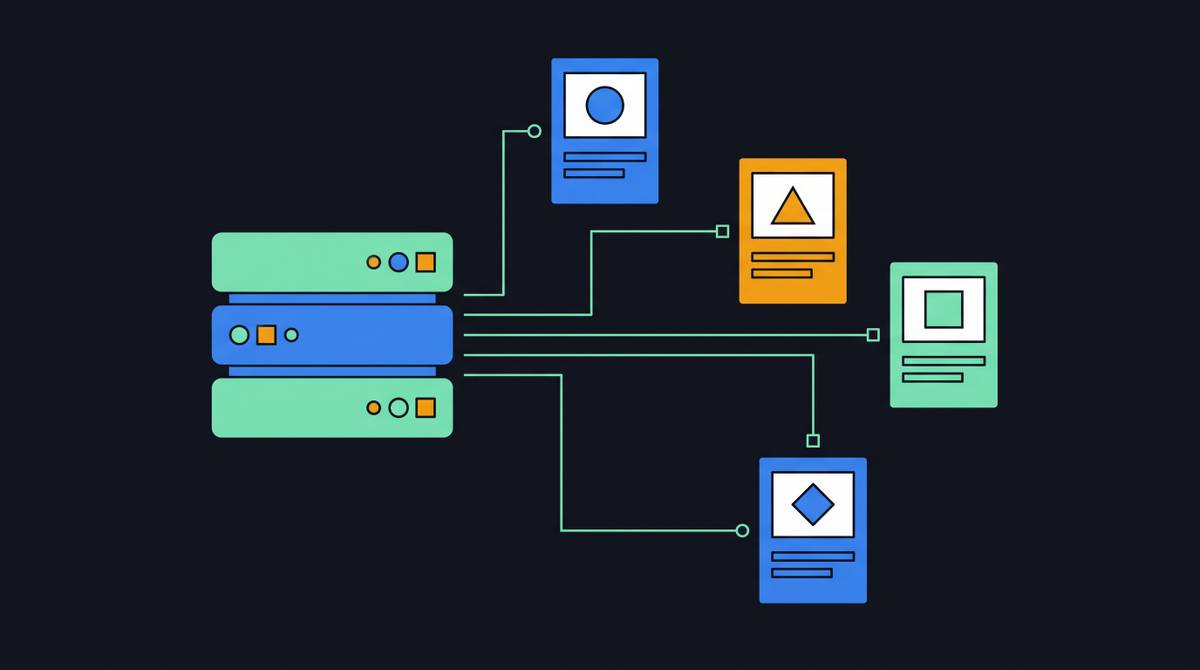
MCP also answers a wiring problem that predates it by years: the M×N integration mess, where M applications each need custom code to talk to N different tools, and the number of point-to-point connections multiplies fast. MCP flattens that into a client-server pattern. A tool builder writes one MCP server. An application developer writes one MCP client. Every combination of the two just works, without bespoke glue code for each pairing.
The cleanest way to hold RAG and MCP apart: RAG answers what the agent knows, pulling relevant context into its reasoning. MCP answers what the agent can access or do right now, at runtime. An agentic workflow that both understands its situation and acts on it needs both pieces working together, not one standing in for the other.
API reference lookup: where MCP-served docs produce measurably better answers than static RAG
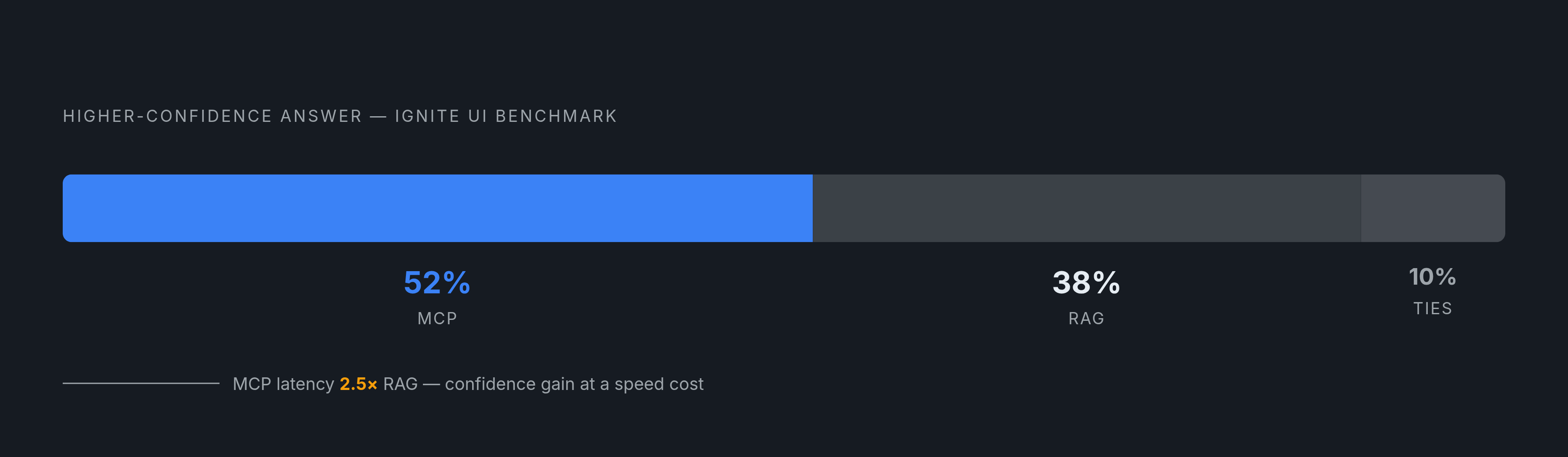
A benchmark run against Infragistics' Ignite UI documentation put numbers on this. Across head-to-head comparisons, MCP produced the higher-confidence answer 52% of the time, against 38% for RAG, with the remaining 10% landing as ties, a real but not overwhelming margin. MCP produced the higher-confidence answer in a majority of cases, a meaningful margin over RAG.
The gap widened sharply on one particular query type: exact API interface lookups, where MCP's advantage over RAG was most pronounced. A developer asking what parameters a method takes has zero tolerance for "close enough," and staleness and imprecision punish that kind of query hardest."
The MCP setup tested here swapped the vector index out entirely for an MCP server built off the Ignite UI CLI, exposing six tools: get_project_setup_guide, list_components, search_docs, get_doc, search_api, and get_api_reference. Instead of retrieving pre-chunked text, the system queried documentation and generated API references at request time, live.
That gain wasn't free, though. The MCP approach ran at roughly 2.5 times the latency of static RAG. Anyone weighing this tradeoff needs to be honest about it: better answers on the queries that matter most, at a real cost in response time. The tradeoff is worth accepting only if the use case can tolerate a few extra seconds in exchange for a materially more correct answer.
Version-aware documentation search across multiple library versions
Version drift is one of the oldest problems in software documentation, and it's one that a single shared index handles particularly badly. The pydocs-mcp project on GitHub states its goal as local, version-aware code and docs search built for AI coding agents, using what it calls the most advanced RAG techniques available for the job.
The EPLAN Electric P8 and EEC Pro documentation setup shows what this looks like at real scale. It runs as five separate sub-projects, three of them remote MCP servers hosted on Cloudflare Workers, each one dedicated to a distinct body of documentation. P8, EEC Pro, and the 2027 API wiki each get their own server rather than sharing one index. And the retrieval method isn't uniform across them either: the 2027 API wiki uses FTS5 keyword search rather than vector-based retrieval, matched to what that content calls for.
Instead of one monolithic index that flattens every version into the same embedding space (where a query about version 3 might just as easily surface a chunk from version 5, with no signal that anything... Instead of one monolithic index that flattens every version into the same embedding space (where a query about version 3 might just as easily surface a chunk from version 5, with no signal that anything's wrong), each version gets its own server. An agent routes explicitly to the right one. Version conflicts stop being invisible; they become something the system can actually surface and resolve, rather than something buried silently inside a similarity score.
In-editor developer documentation search without leaving the coding environment
Here the IDE itself becomes the MCP client, and the MCP server handles the retrieval work behind it, surfacing results inside the editor rather than sending the developer off to a browser tab. An IDE running as an MCP client against a dedicated search backend is a concrete instance of the pattern. The client picks a tool, the tool runs search over documentation, and results feed straight into the response the developer sees inline.
Why does the extra tab matter so much? It's not just friction for friction's sake. Leaving the editor breaks the train of thought a developer is holding, and worse, it opens the door to landing on documentation for the wrong version, or content that's simply out of date, via a general web search. MCP-served docs flip the default: the canonical, current version of the documentation becomes the first thing an agent reaches for, not whatever a search engine happens to rank highest that day.
Enterprise technical Q&A that synthesizes across codebases, architecture records, and postmortems
The honest answer to why a service was built a particular way rarely lives in one document. It's scattered across the codebase itself, an architecture decision record from eighteen months ago, and maybe a postmortem written after an incident that forced the original decision to be revisited. Answering that question well means pulling from all three at once.
An architecture that maps relationships between these sources changes what's retrievable. A single question about a design choice ideally pulls together the ADR that justified it, the postmortem that prompted the ADR, and the current API contract, all in one pass, rather than treating each document as an independent island.
Static, single-index RAG struggles with this kind of synthesis. Ranking chunks by similarity to the query can miss multi-hop reasoning chains that span separate sources written months apart. And when two documents disagree, a system built this way needs to say so rather than quietly picking whichever chunk scored higher. Flagging the conflict and handing it to the engineer to resolve is a more honest answer than a confident one built on a coin flip.
Customer support documentation assistants grounded in live help content
A support agent architecture usually needs two things running side by side: RAG grounding replies in official help content, and MCP exposing live tools, like order lookup or ticket creation, safely alongside it. Neither piece alone gets the job done.
BQE Software, which builds cloud-based firm management tools for architecture, engineering, and professional-services firms, needed to scale support without letting answer quality slip. That meant answers pulled from official help center content and product documentation, with citations attached, rather than answers drawn from whatever the model happened to remember from training. So that's the ground BQE built its support assistant on.
The citation requirement isn't a nice-to-have here. An answer with no traceable source, in a support context, creates a trust problem the moment a customer can't verify it against anything. Grounding replies in retrieved documentation makes citation possible by construction.
There's a dynamic-context wrinkle too. A support agent often needs stable content, the kind that lives in help docs, alongside per-user data that changes by the minute: subscription status, open tickets. RAG alone covers the first. MCP alone covers the second. RAG alone covers the first and MCP alone covers the second, so the architecture requires the combination, not either piece in isolation.
Using RAG to route among MCP tool schemas rather than to retrieve content
As an agent connects to more MCP servers, docs here, a database there, an API somewhere else, connecting to each additional server bloats the context window and degrades accuracy, a problem that has nothing to do with retrieving content. Dump every available tool schema into the system prompt at once and the context window bloats, and accuracy tends to degrade right along with it.
One fix is a lightweight RAG router sitting in front of the tool call. Instead of loading every schema every time, semantic search pulls in only the handful of tool schemas that are actually relevant to whatever the user just asked. The agent still knows, in principle, that dozens of tools exist. It just doesn't load all of them into its working context for every single query.
Documentation systems face too many tools sprawling early: many products, many versions, many MCP servers, each with its own set of tools. A meta-retrieval layer, using RAG to select which documentation server to even query, before any actual document retrieval starts, is what keeps a large documentation ecosystem navigable instead of turning into exactly the kind of bloated, degraded mess the router was built to avoid.
Production retrieval architectures inside MCP-RAG documentation systems
Retrieval architecture has moved on from where it sat a few years back. Pure dense vector search was an early default, but hybrid retrieval, combining dense vectors with BM25 keyword search and fusing the two rankings with Reciprocal Rank Fusion, has become a widely favored production approach heading into 2026. The reason is straightforward: hybrid search recovers exact-match queries cleanly, the kind of query dense vectors alone tend to fumble, like someone searching for an exact function name or error code.
Documentation is rarely clean prose anyway. Production systems have to parse tables, images, and flow charts into structured formats a language model can actually work with, not just plain text. Multi-modal ingestion becomes a practical necessity when technical docs include tables, images, and flow charts that plain-text pipelines cannot handle faithfully.
The governed-rag-mcp server is worth studying as a reference point for what disciplined production governance looks like. It exposes exactly three tools, validates everything at the boundary with Pydantic, constrains its search scope through an environment-bound source access control list, and, in strict confidence mode, returns NO_RELEVANT_CONTEXT rather than passing weak, half-relevant context through to the model. A system willing to say "no good answer here" builds more trust than one that always produces something, because refusing weak output prevents half-relevant context from being passed through to the model.
Inside that same server, retrieval is hybrid by design rather than an either-or choice: SQLite FTS5 handles keyword search, sqlite-vec handles semantic ranking, and Reciprocal Rank Fusion combines the two result sets into one. Keyword and semantic retrieval aren't competing approaches here; they're composed together, each covering the other's blind spots.
Knowledge infrastructure requirements for MCP-served documentation
Every use case covered above rests on the same precondition: the documentation has to be live, structured, and discoverable. Not static. Not siloed. Not rebuilt on some fixed weekly or monthly schedule while the underlying product ships changes daily.
The RAGOps framework, described in a paper (arXiv 2506.03401), states that RAG systems are compound systems, and their quality depends as much on continuous management of the external data feeding them (automated evaluation, testing, ongoing data operations as sources change) as it does on the retrieval model itself. Treating retrieval as a one-time build rather than an ongoing operational discipline is where most of the silent failures in this piece originate.
When documentation changes faster than the infrastructure serving it can keep up, the retrieval layer doesn't throw an error. It just answers from what it has, with the same tone of confidence whether the underlying content is an hour old or six months stale. MCP and hybrid retrieval and governed tool schemas all narrow the gap between what's true and what's retrievable, but none of them close it automatically, and that gap is the failure mode running through nearly every section here. Someone, or something, still has to keep the underlying knowledge current. Content attribution and provenance sit right alongside that same requirement: an answer traceable to its source is only as trustworthy as the freshness of the source itself.